European Inventory of Existing Commercial Chemical Substances (EINECS)
Listed
EC Inventory
Listed
United States Toxic Substances Control Act (TSCA) Inventory
Listed
China Catalog of Hazardous chemicals 2015
Not Listed
Chinese Chemical Inventory of Existing Chemical Substances (China IECSC)
Listed
Korea Existing Chemicals List (KECL)
Not Listed
Canadian Domestic Substance List (DSL)
Not Listed
Canadian Non-Domestic Substance List (NDSL)
Listed
Japanese Existing and New Chemical Substances Inventory (ENCS)
Not Listed
4. SPECIFICATION
Physical Appearance
Pale Yellow To Orange Liquid
Miscibility
Miscible With Methanol
Moisture Content (KF)
NMT 0.50%
Purity (GC)
NLT 85.0%
CIS Isomer (GC)
NMT 2.00%
5. APPLICATION
It is a useful synthetic intermediate.
It was used in the synthesis of irreversible inhibitors of EGFR and HER-2 tyrosine kinases with enhanced antitumor activities.
An antitumor drug Dacomitinib was synthesized using Methyl-4-bromocrotonate. It is a inhibitor of EGFR (epidermal growth factor receptor).
6. HAZARD CLASSIFICATION
Hazardous substance. (UN No. 1760)
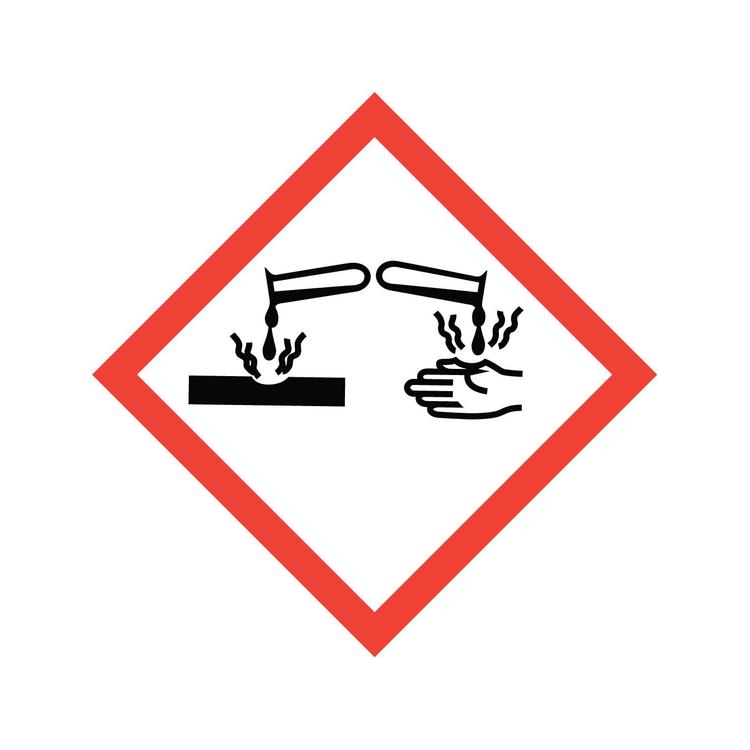
Corrosive
Irritant
7. CAPACITY
6 MT.
8. STORAGE CONDITION
Store in closed container at 25-30°C. Avoid direct sun light.
9. PACKING DETAILS
50kg GI Drum with Screw Lid.
10. SHELF LIFE
4 months.
Disclaimer
Typical properties should not be considered as specification.
Product covered by valid patents are not offered or supplied for commercial use. The Patent position should be verified by the customer.
Products will not be supplied to countries where they could be in conflict with existing patents.
Products currently covered by valid US patents are offered for R&D use in accordance with 35 USC 271 (e) (I) Above information is given in good faith and without warrenty.
Q1: What is Methyl 4-bromocrotonate and what anticancer drug is it used to make?
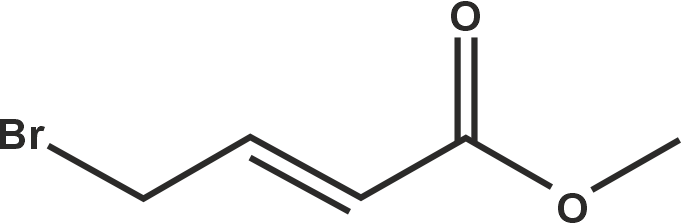
A1: It's a bromine-containing crotonate ester (C5H7BrO2, mol. wt. 179.02) supplied as a pale yellow to orange liquid (purity NLT 85% by GC). It's a key synthetic intermediate used in synthesizing Dacomitinib — an irreversible inhibitor of EGFR (epidermal growth factor receptor) with antitumor activity.
Q2: What makes Methyl 4-bromocrotonate particularly valuable in oncology drug research?
A2: It was used to synthesize irreversible inhibitors of EGFR and HER-2 tyrosine kinases with enhanced antitumor activities. The bromocrotonate scaffold provides a reactive Michael acceptor site that is key to the irreversible binding mechanism of next-generation EGFR inhibitors.
Q3: What hazard classification applies to Methyl 4-bromocrotonate?
A3: Unlike most other Sarex pharmaceutical intermediates, Methyl 4-bromocrotonate is classified as a hazardous substance (UN No. 1760) with both Corrosive and Irritant GHS pictograms. It requires UN-approved packaging and careful handling with appropriate PPE.
Q4: What is the shelf life and storage requirement for this compound?
A4: It has a notably short shelf life of only 4 months (the shortest among Sarex's pharmaceutical intermediates listed) and must be stored at 25–30°C in closed containers away from direct sunlight. It's packed in 50 kg GI drums with screw lids.
Q5: Where is Methyl 4-bromocrotonate manufactured and is it available for export?
A5: Sarex manufactures it in India (6 MT annual capacity) and, as a leading fine chemical manufacturer and exporter, supplies it internationally — though buyers should note the 4-month shelf life when planning procurement and shipping timelines.