











05-07 Oct. 2010
24-25 Apr. 2024
16-18 Apr. 2024
24-25 May. 2023
18-19 Apr. 2023
20-21 Apr. 2022
16-20 Jan. 2020
16-17 Jun. 2019
21-23 Nov. 2012
30-02 Dec. 2011
25-27 Oct. 2025
13-15 Oct. 2009
01-02 May. 2008

CHEMGO AG
Florenz-Strasse 9
4142 Muenchenstein
Switzerland
https://www.chemgo.ch/
CHEMGO SARL
1, rue Claude Chappe
69370 St Didier au Mont d‘Or
France
https://www.chemgo.fr/
Description
CHEMGO originated from the merger of Stehelin AG (established in the 1830s) and Chemgo Organica AG (established in 1976) in 2019. CHEMGO now contains a distribution and agency business. Since 2001, CHEMGO is a member of the London Pharma & Chemicals Group (www.lpc-grp.com), which has businesses and offices in several European countries.
The agency business contains the promotion and sales of a wide range of fine chemicals, mostly for synthesis applications in life sciences and related industries. This activity covers all of Europe, as CHEMGO represents partners in several European countries, India and the US.
CHEMGO’s distribution business services mostly specialty chemicals, analytical, environmental and medical laboratories with various products and equipment. The distribution business is focused on Switzerland.
CHEMGO has exclusive arrangements with leading partners in the corresponding fields and covers a wide range of products, equipment and services.
CHEMGO is SwissMedic audited, authorized for GDP (good distribution practice) and has a limited license to trade with controlled substances.
Remarks
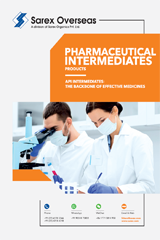
Chemgo represents Sarex in all European countries for fine chemicals & pharmaceutical Intermediates.
The electronic product ROC-107 and all Triazine products are not covered by the Chemgo representation.















How UV Stabilisers Extend the Service Life of Outdoor Polymer Applications
DateMay 22, 2026
Outdoor polymer applications that depend heavily on UV stabilisation include agricultural films, automotive exterior components, construction membranes, geomembranes, outdoor pipes and fittings, wire and cable jacketing, and garden furniture. In each case, the expected service life runs from several years to over a decade — timelines that are simply unachievable without a robust UV stabilisation system built into the formulation from the start.
...Every polymer product used outdoors is fighting a slow, invisible battle. Sunlight, heat, and environmental exposure work together to break down polymer chains, strip colour, and compromise structural integrity — often long before the product has served its intended purpose. UV stabilisers are the primary defence against this degradation, and choosing the right stabilisation chemistry is one of the most consequential decisions a formulator can make. Sarex, as a manufacturer of advanced Triazine-based UV absorbers and light stabilisers, has been at the forefront of developing solutions that give outdoor polymer applications the longevity they demand.
When polymers are exposed to UV radiation, the energy absorbed triggers a chain of photochemical reactions. These reactions generate free radicals that attack the polymer backbone, leading to chain scission and cross-linking. The visible results are familiar: chalking, yellowing, surface cracking, loss of gloss, and ultimately mechanical failure. What makes UV degradation particularly damaging is its cumulative nature — each hour of sun exposure adds to a growing deficit that no downstream treatment can reverse.
For outdoor applications automotive parts, construction profiles, agricultural films, outdoor furniture, pipes, and cables this degradation timeline directly determines product lifespan and replacement cost.
UV stabilisers work by interrupting the degradation process at different stages. The two primary categories are UV absorbers and HALS (Hindered Amine Light Stabilisers), and in most high-performance systems, both are used together.
UV absorbers function by intercepting UV radiation before it reaches the polymer chain. They absorb the harmful energy and release it as harmless heat, effectively acting as a sacrificial shield for the base material. Triazine-based UV absorbers are considered the most effective chemistry in this category — offering broader UV absorption range, higher thermal stability, and lower volatility compared to older benzophenone and benzotriazole chemistries. This makes them especially suited to applications where processing temperatures are high and outdoor exposure is prolonged.
HALS operate differently. Rather than absorbing UV radiation, they scavenge the free radicals generated during photo-oxidation, breaking the degradation cycle before it causes irreversible polymer damage. HALS are catalytic in nature, meaning they are not consumed in the process and continue providing protection over extended periods. This sustained action makes them particularly valuable in long-life outdoor applications.
Selecting a single UV stabiliser and calling the formulation complete is a common and costly mistake. The most durable outdoor polymer systems use a carefully balanced stabiliser package — UV absorbers to block incoming radiation, HALS to neutralise reactive species, and antioxidants to manage thermal degradation during both processing and service life.
The ratio, compatibility, and interaction between these components determine the real-world performance of the final product. Getting this formulation balance right requires both deep chemistry knowledge and hands-on production experience.
Outdoor polymer applications that depend heavily on UV stabilisation include agricultural films, automotive exterior components, construction membranes, geomembranes, outdoor pipes and fittings, wire and cable jacketing, and garden furniture. In each case, the expected service life runs from several years to over a decade — timelines that are simply unachievable without a robust UV stabilisation system built into the formulation from the start.
The shift in the industry is clear polymer producers and compounders are increasingly looking beyond price-per-kilogram and evaluating additive partners on the basis of technical depth, formulation support, and consistency of supply. By working with a manufacturer like Sarex, compounders gain not just a chemical input but a formulation partner committed to extending the performance life of every product they produce.
Read MoreChemical vs Physical UV Filters: Science, Safety Myths and Consumer Perception in 2026
DateMay 21, 2026
Both chemical and physical UV filters effectively protect the skin if formulated appropriately. The discussion should centre on science rather than myths. In 2026, science confirms the effectiveness of both filter types under regulatory guidelines.
...The world of sunscreen ingredients can be confusing, what with the "mineral" and "chemical" designations and social media opinions flying left and right. You just want to find a product that will protect you effectively while providing an agreeable feel and texture. Here is how you make sense of it all.
Both chemical and physical filters block UV radiation. They also require formulation expertise, trigger certain safety considerations and inspire varying consumer perceptions. With scientific advances in 2026, your task becomes relatively straightforward.
There are two kinds of ultraviolet radiation, namely UVA and UVB. While the latter causes burns, UVA drives skin ageing processes. Broad spectrum protection is key here.
Chemical, or organic, filters absorb UV light and transform its energy, into heat that is released, from the skin. This process is quite rapid and takes place at the molecular level.
Physical filters, which include zinc oxide and titanium dioxide, perform the same action. They absorb and scatter UV radiation. Modern coating technologies minimise, the occurrence of photocatalytic reactions, thus limiting free radical generation.
Both filter types undergo extensive safety, stability and photostability assessments, prior to being approved.
Let's debunk the most popular misconceptions, surrounding UV filters once and for all.
First myth: mineral equals fully natural and therefore automatically safer. In truth, zinc oxide and titanium dioxide are processed ingredients. They need a surface coating to stabilise and prevent adverse reactions. The safety of any filter ultimately depends on its grade and purity.
Second myth: chemical filters always enter the bloodstream and cause harm. In reality, regulatory authorities assess toxicology, dermal absorption and endocrine data, for every filter. The selected filters demonstrate low levels of systemic absorption, within safe limits. Ongoing reviews are conducted internationally throughout 2026.
Third myth: nanoparticles are inherently dangerous. Research shows that properly coated, non inhalable nanoparticles applied in creams remain on the skin surface. Risk varies by filter form and exposure route.
Ultimately, the risk of a particular ingredient requires assessment on an individual basis.
As with safety issues, environmental risks depend on filter chemistry and concentration. Older chemical filters posed a danger to marine life. Certain regions have reviewed or restricted the use of certain ingredients for that reason.
However, not all chemical filters behave the same way. Similarly, some forms of mineral filters can build up in ecosystems as well.
Nowadays, manufacturers pay attention to biodegradable profile, reef safety and ecotoxicity screening. Responsible sourcing and manufacturing practices minimise the risk.
Mineral filters tend to create thick formulations. They can leave a white cast on darker skin types. However, recent advancements in micronisation and dispersion technologies greatly improve the cosmetic aspect of such filters.
Chemical filters enable lighter textures. They often provide invisible applications and help achieve higher SPF values. Moreover, many sunscreens contain a combination of chemical and physical filters, to enhance photostability and offer balanced broad spectrum protection. Antioxidants, like vitamin E often complement the formulation.
While a formula rich in zinc oxide can be less irritating for sensitive skin types, formulation plays a bigger role than marketing.
In 2026, consumers will scrutinise the ingredient list of sunscreens. Many choose "mineral" ingredients for reasons of safety. Other consumers value ease of application, invisible finish and performance.
Lab testing transparency also makes a difference in their purchasing decision. Verification of independent data, stability and proper labelling play important roles.
Look for broad spectrum coverage. Make sure the SPF corresponds to your sun exposure. Check for photostabilisers in the formula. If you consider environmental impact, pay attention to brand transparency and test results.
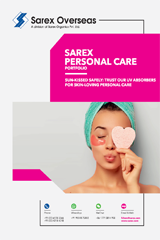
For formulators and bulk buyers, source control is equally important. High quality UV absorber for personal care products, guarantees compliance and consistency.
Both chemical and physical UV filters effectively protect the skin if formulated appropriately. The discussion should centre on science rather than myths. In 2026, science confirms the effectiveness of both filter types under regulatory guidelines.
Manufacturers seeking to purchase dependable raw materials and grades of UV absorber for personal care products will find Sarex to be the perfect one stop marketplace for innovative fine and textile chemicals in India.
Read MoreWhy Triazine is better to use?
A Triazine UV absorber has excellent properties. In addition, the dosage you need to put into your polymer is usually lower compared to other UV absorbers.
What types of Triazine Product do you offer?
Triazine Exists in three Isomeric forms, we offer 1,3,5-triazine , as its being the most common and widely used Triazine isomeric form to manufacture chemical worldwide.
In which industries Triazine products can be used?
We offer Triazine product industry wise i.e., POLYMER ADDITIVE, COATING, TEXTILE INDUSTRY, PERSONAL CARE & COSMETIC, PHARMACEUTICAL INTERMEDIATES, and ELECTRONIC INDUSTRY
Why are UV Absorbers Used for Coatings?
UV absorbers improves the colour fastness and the durability of the coatings. The coated surface which is exposed to the Sun light is susceptible to degradation due to UV rays of the Sunlight. UV absorber additive in the coating protect it from the UV rays of the Sun.
What is your approach to sustainability and environmental responsibility?
We have been awarded the prestigious EcoVadis Gold Certificate, a testament to our unwavering commitment to sustainability and responsible business practices. The Gold certification shows that we take our social responsibility very seriously.
What procedure should I follow to enquire for Fine Chemical?
You can enquire by simply filling out our contact us & enquiry form. You need to mention your fine chemical related products in the message box.
What is EHS policy?
EHS policy stands for Environment, Health & Safety policy. It refer to rules & regulations to protect the health and safety of employees and the public as well as the environment from hazards associated with the workplace.
What is the quality assurance process for your fine chemicals?
We are accredited ISO 9001:2015, ISO 14001:2015, ISO 45001: 2018 for Quality, health and environment
Quality is assured by highly trained personnel of Quality assurance and Quality control department.
We have regularly calibrated quality control instruments for quality assurance. For detailed information, please refer to the PDF document available here. Download PDF
![2,4-Bis[4-(2-ethylhexyloxy)-2-hydroxyphenyl]-6 -(4-methoxyphenyl)-1,3,5-triazine (Sarasorb BEMT)](https://www.sarex.com/fine/storage/app/uploads/public/689/1ba/640/6891ba640ca97558084686.png)
![2-ethylhexyl-4-[[4,6-bis[4-(2-ethylhexoxycarbonyl)anilino]-1,3,5-triazin-2-yl]amino]benzoate (Sarasorb EHT)](https://www.sarex.com/fine/storage/app/uploads/public/689/1ba/c74/6891bac741d83995508238.png)