
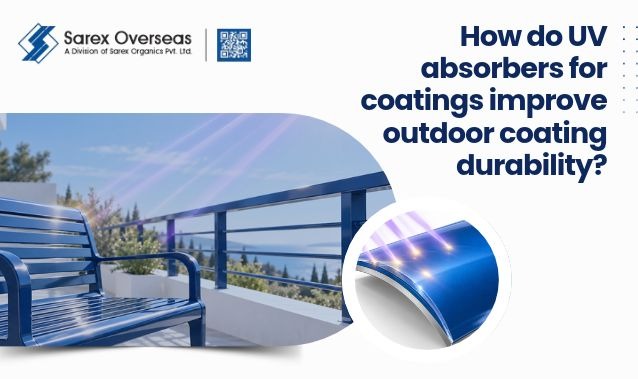
Outdoor coatings are continuously exposed to sunlight, temperature fluctuations, moisture and environmental pollutants. Over time, these conditions can cause fading, discolouration, loss of gloss, cracking and deterioration of the coating film. UV radiation is one of the major factors responsible for these changes, particularly in applications where surfaces remain exposed to direct sunlight for extended periods.
UV absorbers for coatings help reduce the damage caused by ultraviolet radiation, supporting colour retention, surface appearance and long-term coating performance. When selected correctly, they can help improve the durability of coatings used on metal structures, automotive components, industrial equipment, furniture and other outdoor surfaces.
What Are UV Absorbers for Coatings?
UV absorbers are additives incorporated into coating formulations to protect the coating film from harmful ultraviolet radiation. They work by absorbing UV energy and dissipating it primarily as heat, reducing the amount of radiation that reaches sensitive components within the coating.
UV radiation can trigger photochemical reactions that break down binders, pigments and other organic components. These reactions may gradually affect the coating's colour, gloss, flexibility and protective properties.
By limiting UV exposure within the coating film, UV absorbers help slow down these degradation processes. Their effectiveness depends on factors such as the coating chemistry, additive concentration, film thickness and expected exposure conditions.
Key Benefits of UV Absorbers for Outdoor Coatings
1. Improved Colour Retention
Prolonged sunlight exposure can cause painted surfaces to fade or change colour. UV absorbers reduce UV-induced damage to pigments and coating binders, helping surfaces retain their original appearance for longer. This is particularly important for automotive finishes, architectural coatings and outdoor furniture, where appearance directly influences product quality.
2. Better Gloss and Surface Finish
UV degradation can cause coatings to lose their shine and develop a dull, weathered appearance. By reducing photochemical damage, UV absorbers help maintain surface gloss and finish. This can reduce the need for frequent repainting or refinishing, depending on the coating system and exposure conditions.
3. Extended Coating Service Life
UV radiation can weaken the polymer binder that holds a coating together, eventually contributing to cracking, chalking and peeling. By slowing this degradation, UV absorbers help preserve the coating film and its protective properties. This is valuable for industrial equipment, metal structures and exterior components exposed to sunlight throughout the year.
4. Enhanced Weathering Resistance
Outdoor coatings face several environmental stresses simultaneously. UV absorbers address UV-related degradation, while other formulation components help protect against moisture, oxidation and temperature changes. Together, a well-designed coating system can deliver more consistent performance under outdoor conditions.
How to Choose the Right UV Absorber
Selecting a suitable UV absorber requires consideration of the coating formulation and its intended application. Important factors include:
- Resin compatibility: The additive should work effectively with the coating's binder and other ingredients without causing haze, separation or surface defects.
- UV protection requirements: Different absorber chemistries offer different performance characteristics. Triazine-based UV absorbers, for example, are used in coatings and polymer applications requiring weathering resistance.
- Thermal and chemical stability: The additive should withstand the formulation's processing conditions and remain effective during service.
- Exposure conditions: Consider sunlight intensity, expected outdoor exposure, coating thickness and the required service life.
UV absorbers are also frequently combined with hindered amine light stabilisers (HALS). While UV absorbers absorb harmful radiation, HALS help control free-radical reactions involved in photodegradation. Their combination can provide broader protection against weathering when appropriately formulated.
Improve Outdoor Coating Performance with Sarex
Choosing the right additives is an important step towards developing durable outdoor coatings. Sarex offers triazine-based UV absorbers for coatings and polymer applications, helping formulators explore suitable options for UV protection and weathering resistance. The appropriate grade should be selected according to the resin system, application requirements and performance testing results.
Conclusion
UV absorbers for coatings help reduce sunlight-induced degradation, preserve colour and gloss, and support longer-lasting outdoor finishes. Their effectiveness depends on appropriate additive selection, formulation compatibility and exposure conditions. By incorporating suitable UV stabilisation systems, manufacturers can develop coatings that maintain their appearance and protective performance for longer. For application-specific requirements, Sarex can be a starting point for exploring triazine-based UV absorber solutions.